That might sound strange coming from a web design studio. Nobody actually wants a website. Not really, not if you ask what they are actually trying to accomplish. Ask any founder what they are actually trying to accomplish and they will not say “I want a website.” They will say “I need more leads.” “I need people to find me.” “I need something that actually works.” What they want is customers. What they want is to be found.
There are over 1.1 billion websites on the internet, brands and business owners believe having a website is important for their business. Yet the majority report little to no measurable impact on their revenue. The website gets blamed. But the website was never the problem. The problem was treating the website like a brochure instead of a business tool. A brochure sits on a shelf and waits to be picked up. A business tool works every single day to get results for your business.
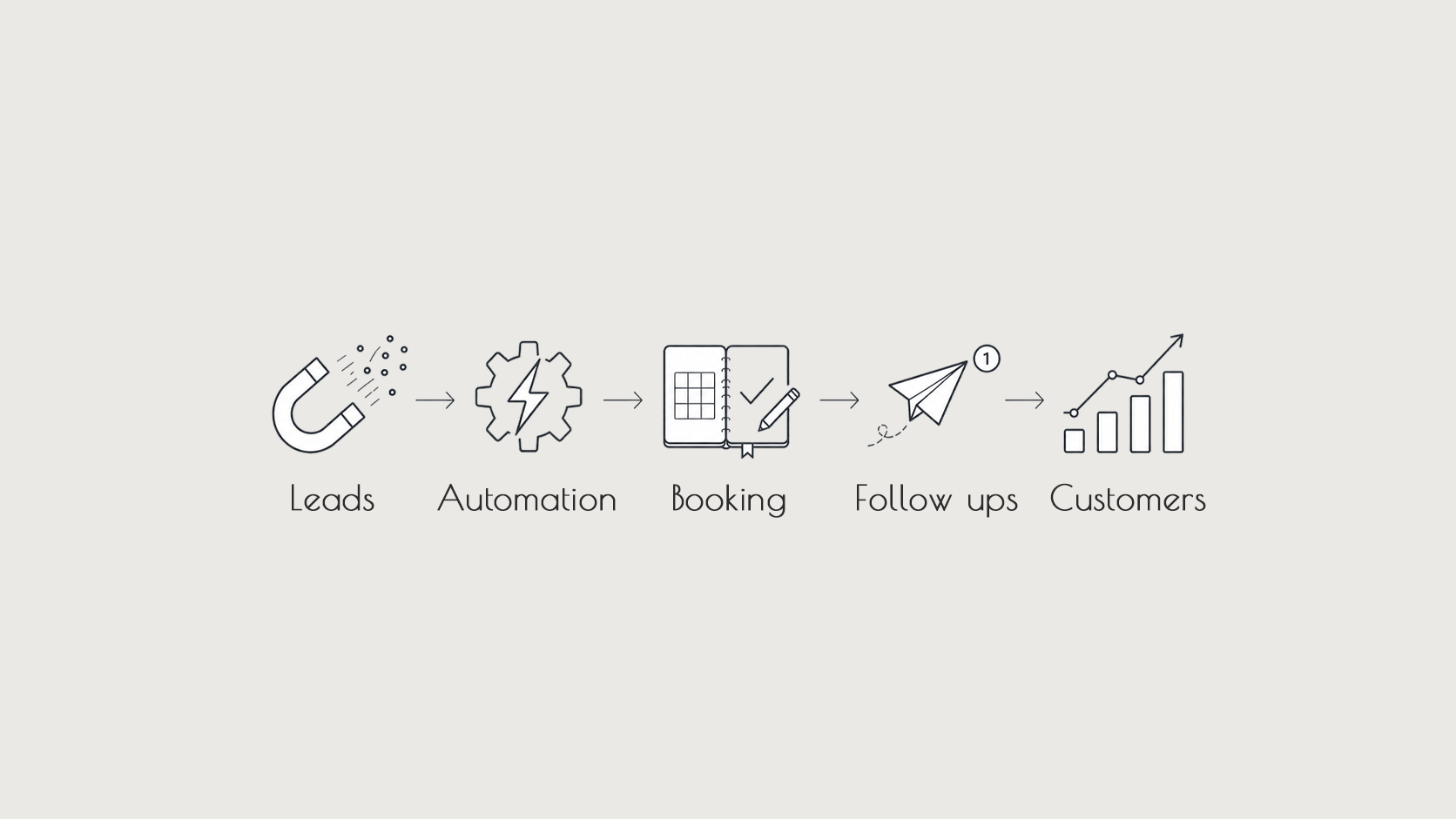
Most websites fail to answer the important questions that delivers real impact for businesses. Who is this for and what do they need to feel the moment they arrive? What is the one action we want them to take and how easy have we made it for them? What happens after they take that action? Is there a booking system, a follow-up sequence, a CRM integration that means no lead gets lost? Is the site findable by the people who are actively searching for this service right now?
Customers regularly use the internet to find businesses as a primary discovery channel. And yet most websites are not optimized for the searches those customers are performing. A Salesforce report found that 80% of customers say the experience a business provides is as important as its products or services. Not just the branding. The experience. How easy it is to find information, book a service, get a follow up, feel taken care of.
Businesses that prioritize customer experience generate 60% higher profits than those that don’t(according to research by Forrester). The key differences are about systems. About how people find the business, what happens when someone arrives, what they feel, what they do next, and what the business does in response. The businesses pulling ahead in their markets are the ones that understand early that a website is more than an online presence. It’s a valuable business asset, and they invest in it accordingly.
There is a hidden cost to treating your website as a passive online brochure instead of a business tool.
In economics there is a concept called opportunity cost. The cost of what you give up by choosing one option over another. Most businesses calculate the cost of building a website. None of them calculate the cost of not building one or one that doesn’t work.
Practically, if your website gets 500 visitors a month and converts at 1% that is 5 leads. Improve the conversion rate to even 3% through better SEO, copy, clearer calls to action, and a simpler user journey and you have 15 leads from the same traffic. No additional marketing spend. No new campaigns. Just a website doing its job properly. A study by McKinsey found that businesses excelling at personalization generate 40% more revenue than their competitors. These are not abstract statistics. They are the compound interest of a website that was built with intent rather than built to exist.
Visibility and conversion are the same problem
Visibility and conversion are not separate challenges. They’re two sides of the same problem. A website that nobody finds cannot convert. A website that gets found but doesn’t convert is just losing leads. Both come from the same root cause: building a website instead of building a system.
The businesses that get this right make one fundamental shift in how they think about their digital presence. They start seeing their website as a business tool and focus on “what should our website do?”
That question changes the brief entirely. It changes what gets prioritized. It changes how success gets measured.
A website that works generates leads, it qualifies prospects before they call, it can also books appointments, sends confirmations, triggers follow-up sequences, and feeds your pipeline continuously. It shows up when people search for what you offer in the cities where you operate. It builds trust even before a single conversation has happened. That is not a website in the way most people use the word. It is a growth platform. And the difference between the two is not a matter of budget or technology. It is a matter of intent.
Nobody actually wants a website. What they want is customers. What they want is visibility. What they want is a business that grows without requiring them to personally chase every lead and manage every touchpoint.
The website is the vehicle for all of that. But only if it was built with that purpose from the ground up.
The millions of passive websites on the internet are not a design failure. They are a brief failure. They are what happens when the conversation starts with “what do you want it to look like” instead of “what do you need it to do.” Start with the second question. Build everything else from there.